Global expansion represents a monumental opportunity for growth, innovation, and accessing specialized talent pools. However, the ambition to hire internationally often crashes head-first into a wall of complex regulatory mandates, intricate payroll systems, and opaque local labor laws. For organizations looking to scale without the crippling commitment of establishing foreign legal entities, the international employer of record (EOR) has emerged as the most powerful and strategic solution.
An international employer of record is not merely a vendor; it is a critical strategic partner that assumes the full legal responsibility for employment administration in a foreign jurisdiction. This model allows a client company to leverage global talent pools—hiring remotely in virtually any country—while the EOR handles all the legal, tax, and HR compliance obligations. By serving as the legal employer, the EOR shields the client company from the financial and legal risks inherent in cross-border operations, transforming what was once a complex, multi-year process into a rapid, compliant path to global market entry.
Understanding the Core Function of an International Employer of Record
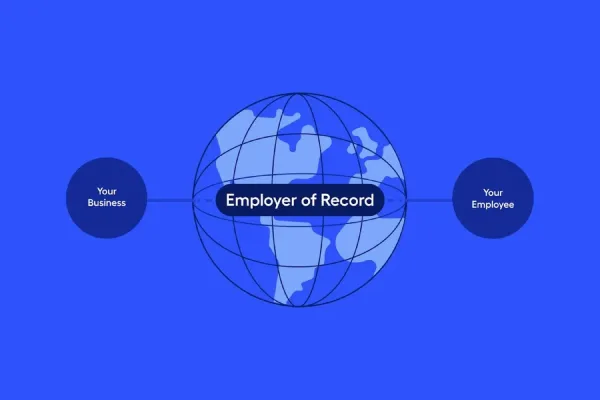
The function of an international employer of record is defined by a clear delineation of responsibilities between the three parties involved: the client company, the EOR provider, and the employee.
Defining the Legal Framework: What an EOR Is (and Isn’t)
An EOR operates under a co-employment structure. The international employer of record holds the official status as the legal employer (the party responsible for all contracts, payroll, benefits, and compliance filings). Conversely, the client company acts as the managing employer, retaining full control over the employee’s day-to-day duties, projects, performance, and strategic goals.
This distinction is vital for compliance. Unlike a staffing agency or a Professional Employer Organization (PEO), the EOR model is specifically designed to manage employees in countries where the client company has no existing legal entity. This structure makes it the definitive solution for companies seeking to hire individual remote workers or establish small teams quickly in new territories.
How the EOR Model Mitigates Risk
For multinational businesses, compliance risk is the single greatest barrier to entry. Every country possesses unique and often conflicting labor codes regarding termination, benefits, notice periods, and working hours. Violating these laws—even unintentionally—can result in massive fines, forced severance payments, and significant legal disputes.
The international employer of record assumes and manages this liability by ensuring:
- Fully Compliant Contracts: Employment agreements are drafted and executed in accordance with local legal mandates, minimizing risks associated with misclassification or invalid termination clauses.
- Statutory Compliance: The EOR handles all necessary registrations with local tax and social security authorities.
- Tax and Reporting Accuracy: The provider assumes responsibility for the accurate calculation, withholding, and remittance of income tax, employer contributions, and social security payments.
By transferring these complex administrative and legal burdens, the international employer of record effectively de-risks global hiring, allowing the client company to focus purely on business strategy.
The Strategic Advantage: Speed, Cost, and Agility
Establishing a foreign subsidiary often takes months, costs hundreds of thousands of dollars in legal and administrative fees, and requires a long-term commitment. The EOR model bypasses this infrastructure requirement entirely, offering three critical advantages:
- Speed to Market: Talent can be onboarded in a new country in days or weeks, rather than months. This agility is crucial for capturing market opportunities or outflanking competitors.
- Cost-Effectiveness: The EOR structure eliminates the initial capital investment required for local entity setup, ongoing entity maintenance fees, and the necessity of hiring specialized in-house compliance staff for every region.
- Market Testing: Companies can use an international employer of record to conduct pilot projects or market testing with local teams before deciding on a permanent, large-scale infrastructural investment.
The Global Compliance Minefield: Why Expertise is Non-Negotiable
The value of an international employer of record lies in its ability to master the fragmented and often contradictory labor environments of hundreds of nations.
Mastering Local Labor Law and Employment Contracts
Labor laws are highly protected in many jurisdictions, favoring the employee. An EOR must maintain expert knowledge in several key areas:
- Termination Rules: Understanding “at-will” employment (rare outside the US), mandatory severance payments, legally required notice periods, and valid grounds for dismissal.
- Working Time Regulations: Adherence to local limits on weekly hours, overtime calculation methods, and legally mandated rest periods.
- Annual Leave and Public Holidays: Ensuring correct entitlement and administration of annual leave, which varies wildly across continents.
A high-quality international employer of record will have in-house counsel or trusted local legal partners in every country they service to ensure that every contract is locally optimized and legally sound.
International Payroll and Tax Obligations
Payroll processing across borders involves managing currency exchange, varying pay cycles, and mandatory deductions. The EOR’s role is to ensure precise and timely disbursement while managing the full spectrum of employer obligations:
- Employer Contributions: Calculating and paying the legally mandated portion of social security, healthcare, and unemployment insurance taxes, which can vary from negligible to upwards of 40% of the employee’s salary depending on the country.
- Tax Withholding: Accurate withholding and reporting of employee income tax to the correct local authorities.
Navigating Mandatory Benefits and Insurance
Benefits administration is a complex component of the total employment cost. The international employer of recordmust facilitate all statutory benefits required by local law, which often include:
- Pensions and Retirement Plans: Enrolling employees in state-mandated or legally required company schemes.
- Health and Medical Coverage: Providing access to mandatory or competitive health insurance schemes where required.
- Disability and Life Insurance: Ensuring compliance with legally required minimums for employee protection.
For an article aiming for expertise, emphasizing the mandatory nature of these benefits—and the risks of non-compliance—is key to demonstrating E-E-A-T.
Selecting the Optimal International Employer of Record Partner
Choosing the right international employer of record is a decisive strategic action. The market is saturated, and providers differ significantly in their operational model, leading to huge variations in compliance quality.
Global Reach vs. Local Depth: The Importance of Owned Entities
This is the single most important factor for compliance and operational efficiency.
- Owned Entities (Direct EOR): The provider operates using its own registered legal entities within the target country. This offers faster onboarding, tighter control over compliance, and direct accountability.
- Partner Model (Aggregator EOR): The provider relies on a network of third-party vendors or local partners to perform the actual EOR functions. This model often introduces layers of complexity, communication delays, variable service quality, and increased risk exposure due to less direct oversight.
A top-tier international employer of record will emphasize its use of owned or directly controlled entities in key markets, especially in regions with high compliance burdens.
Technology and Integration
Modern global hiring demands seamless digital integration. An ideal EOR partner should provide a unified, secure, and user-friendly platform that handles:
- Centralized HR Management: A single dashboard for managing all global employees, contracts, and payroll data.
- Real-time Reporting: Access to compliance and payroll reports that integrate easily with the client company’s existing HRIS or financial systems.
- Security and Data Integrity: Adherence to strict global data protection laws like GDPR, ensuring employee data is handled securely across all jurisdictions.
Transparent Pricing and Cost Structures
The lowest price is rarely the most compliant price. When evaluating providers, client companies must look beyond the monthly fee per employee. The best international employer of record will disclose all costs clearly:
- Service Fees: The provider’s administrative charge.
- Employer Statutory Costs: The mandatory government taxes and social contributions (these are fixed by law, not the EOR).
- Benefit Costs: The precise cost of mandatory and supplemental benefits packages.
Transparency prevents the common practice of marking up statutory costs or benefits, which can significantly inflate the total employment cost.
Dedicated Employee Support and Experience
An EOR manages the employee’s entire professional life cycle. Therefore, the quality of employee support directly impacts retention and engagement. The partner must offer:
- Multilingual Support: Direct assistance for employees in their native language to handle payroll queries, tax forms, and benefit questions.
- Local HR Guidance: Dedicated local HR professionals who understand cultural nuances and can handle disciplinary or contractual issues in a regionally sensitive manner.
The international employer of record is not just managing compliance for the company; it is responsible for the employee experience.
The Specialized Challenge of Expansion in High-Growth Regions
While a handful of global EOR providers advertise coverage in over 150 countries, the real compliance challenge arises in complex, high-growth, and highly regulated markets like the Gulf Cooperation Council (GCC), specifically Saudi Arabia. This regional focus requires a level of Expertise that generalist global platforms often lack.
The Unique Regulatory Landscape of the Gulf Cooperation Council (GCC)
In GCC countries, employment is intertwined with visa sponsorship, local partnerships, and cultural mandates. Challenges include:
- Visa Sponsorship: The EOR must possess the local licenses and infrastructure to legally sponsor work visas and residence permits, a complex and paper-intensive process.
- Local Statutory Requirements: Strict rules regarding local ownership, documentation notarization, and specific contract formats mandated by the Ministry of Labor.
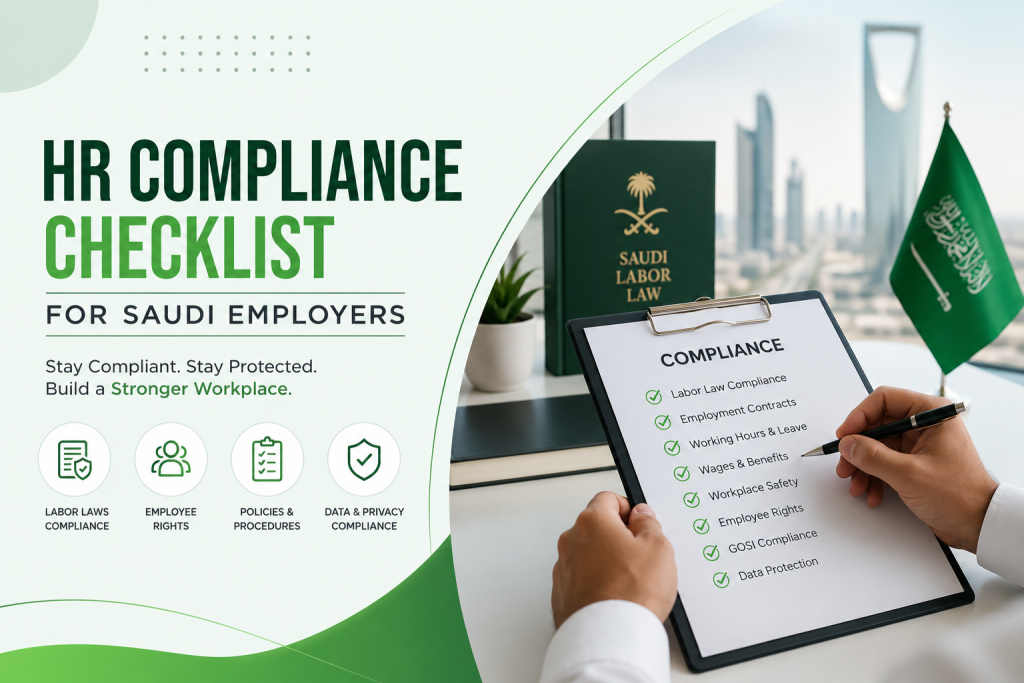
Mastering Saudi Labor Law and Saudization Quotas
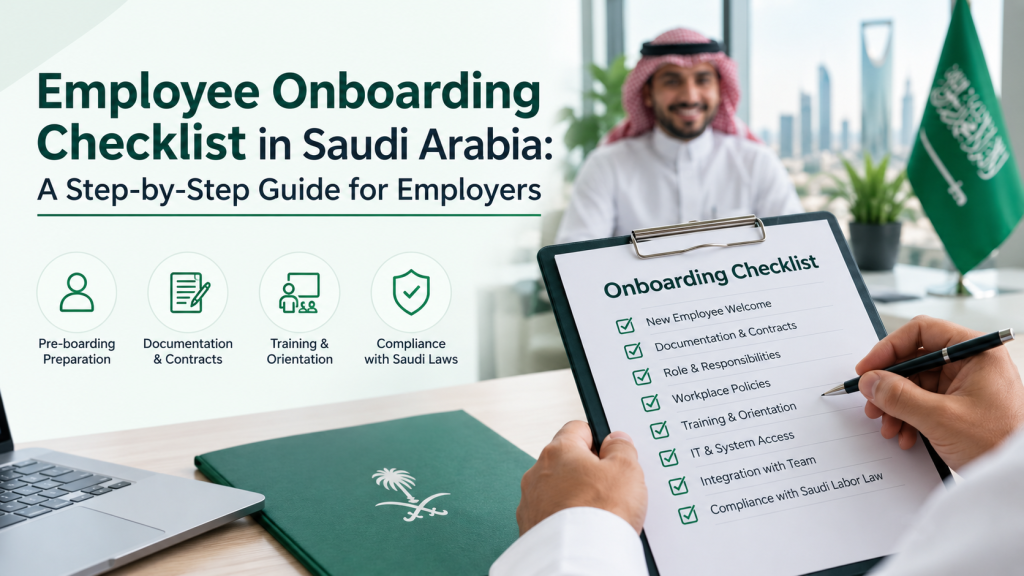
Saudi Arabia presents one of the most stringent compliance environments globally, particularly due to the national employment policy of Saudization (Nitaqat).
An expert international employer of record focused on this region must provide meticulous guidance on:
- Nitaqat Compliance: Ensuring that the client company’s hiring practices do not negatively impact the required quota of Saudi national employees.
- GOSI Filings and Wage Protection System (WPS): Managing mandatory social insurance (GOSI) and adhering to the stringent WPS system that tracks salary payments to prevent wage theft.
- Local Contract Terms: Drafting employment contracts that comply with the specifics of the Saudi Labor Law regarding probation periods, annual increments, and termination entitlements.
The Advantage of In-Market Expertise over Global Generalists
For businesses targeting markets like Saudi Arabia, a generic international employer of record that relies on arm’s-length third parties can create significant compliance gaps, delays, and security risks.
The true authority comes from providers who have boots on the ground—local legal entities, dedicated in-house compliance officers, and HR teams who are intimately familiar with day-to-day regulatory changes. This focused expertise ensures that the client company’s expansion is not only compliant on paper but is also operationally effective in a highly complex local environment.
Operationalizing the Partnership: The EOR Lifecycle
A successful engagement with an international employer of record follows a predictable, yet critical, lifecycle.
Seamless Onboarding and Contract Generation
The process begins immediately after the client company selects a candidate. The EOR manages the entire onboarding pipeline:
- Data Collection: Gathering all necessary personal and compliance documentation from the new employee.
- Contract Drafting: Generating the locally compliant employment agreement, often available in both the local language and English.
- Onboarding Protocol: Completing mandatory government registrations (tax, social security) before the employee’s first day.
A fast and frictionless onboarding process—often cited as a key indicator of a high-quality EOR—ensures a positive first impression for the new hire.
Ongoing HR Support and Performance Management
While the client company manages performance, the EOR handles all administrative lifecycle events:
- Benefits Administration: Managing enrollment, changes, and queries related to health, pension, and leave.
- Payroll Execution: Processing monthly salary and expense claims in the local currency.
- Compliance Monitoring: Proactively notifying the client company of regulatory changes that may affect employment terms, such as mandatory minimum wage increases or new tax regulations.
Offboarding and Termination Compliance
Terminating an employee is the point of highest compliance risk, particularly in jurisdictions with strong employee protection laws. The international employer of record manages this process end-to-end, ensuring:
- Legally Sound Justification: Verifying the grounds for termination align with local law.
- Accurate Severance Calculation: Calculating and disbursing all final payments, including mandated severance, accrued leave pay, and notice period pay.
- Documentation: Providing all necessary legal documentation and exit paperwork as required by local authorities.
Compliance in the offboarding stage protects the client company from expensive wrongful termination claims.
Leveraging the International Employer of Record for Sustainable Global Growth
The global hiring market is undergoing a seismic shift, driven by technology and the demand for specialized talent that is no longer geographically confined. The international employer of record is the essential mechanism that bridges the gap between global ambition and local compliance reality.
By leveraging an EOR, businesses gain the competitive edge of rapid expansion, maintain stringent legal and tax compliance, and offer a positive, secure employment experience to their global workforce. For businesses operating in highly regulated jurisdictions, the partnership with an international employer of record is not a luxury—it is the foundational requirement for sustainable, risk-free global growth. Choosing a partner who specializes in depth of compliance over breadth of coverage, particularly in complex regions, ensures that a company’s global expansion is built on a solid foundation of expertise and trust.